English


Views: 0 Author: Site Editor Publish Time: 2026-10-15 Origin: Site


Sourcing equipment for commercial pools at hotels, resorts, or aquatic centers drastically shifts procurement focus. Buyers must look beyond initial upfront unit costs. Instead, you need to prioritize long-term operational expenditure and robust risk mitigation. A commercial-grade unit must handle significantly higher usage volumes on a daily basis. It also faces stricter compliance standards and requires more complex integration than standard residential models. When a commercial pool goes cold, guest satisfaction drops instantly, impacting your bottom line. Therefore, facility managers need exceptionally durable equipment. This guide provides a clear, actionable framework for evaluating and shortlisting suppliers. You will learn how to find a partner capable of meeting strict commercial project demands. We explore how to ensure peak efficiency without compromising supply chain reliability. By applying these steps, you will confidently secure systems tailored exactly to your unique climate conditions.
Evaluate manufacturers based on verified Coefficient of Performance (COP) data and their integration of DC inverter technology for OPEX reduction.
Prioritize suppliers with transparent supply chains, demonstrated OEM/ODM capabilities, and scalable production capacity for large orders.
Require proof of regional compliance (e.g., CE, ETL, TUV) and verify the terms of commercial-specific warranties.
Assess after-sales infrastructure, focusing on localized parts availability and technical support response times.
You cannot evaluate a supplier properly without first understanding your own facility parameters. Thorough preparation prevents mismatched equipment and ensures you receive accurate quotes.
Establish your exact BTU or kW requirements early in the process. Pool volume provides a starting point, but you must factor in target water temperature and regional climate variables. Ambient air temperature dictates how hard the compressor works. Wind exposure across the water surface accelerates heat loss drastically. A swimming pool heat pump installed in a windy coastal resort requires a different sizing calculation than one in a sheltered indoor aquatic center. Always document your worst-case winter ambient temperatures to ensure the unit can handle peak heating loads.
Commercial Pool Sizing Variables Matrix
Variable | Impact on System Sizing | Facility Action Required |
|---|---|---|
Surface Area | Determines evaporative heat loss rate. | Measure total square footage precisely. |
Wind Speed | High winds strip heat from the water rapidly. | Assess natural windbreaks or plan for oversizing. |
Target Temperature | Higher targets require exponentially more energy. | Define exact clinical, recreational, or athletic temps. |
Document the facility’s operating hours meticulously. Continuous heating demands require different compressor durability than seasonal or intermittent usage. A hotel pool running 24/7 needs industrial-grade internal components. Conversely, a summer-only camp pool might tolerate a lighter-duty system. Outline your peak bather load times. Heavier bather loads introduce more water turbulence, which increases heat loss. Accurately profiling your usage ensures you select a system engineered for your specific operational stress levels.
Assess existing electrical infrastructure before you solicit quotes. Many commercial sites lack the necessary three-phase power capacity for massive single units. Space limitations also dictate system architecture. You must determine if modular or cascaded systems are preferable to a single massive block. Cascaded systems offer redundancy. If one module requires maintenance, the others continue heating the water. Measure your plant room doorways, concrete pads, and ventilation clearances to prevent costly installation surprises later.
Not all heating technologies deliver the same performance. You must scrutinize the engineering choices inside the cabinet to guarantee long-term reliability.
Verify the supplier's expertise in full DC inverter technology. Traditional on/off systems consume massive amounts of energy during startup spikes. Inverter systems adjust their compressor speed dynamically. They ramp up to reach the target temperature quickly, then slow down to maintain it. Demand empirical data showing how their variable-speed compressors adapt to commercial loads. This technology maintains precise water temperatures while drastically lowering energy consumption.
Here is what to watch out for when evaluating inverter claims:
Step-inverter vs Full Inverter: Ensure they use full stepless DC inverters for maximum efficiency.
Compressor Brand: Look for recognized compressor manufacturers like Mitsubishi or Panasonic inside the unit.
Fan Motor Integration: The fan motor should also be a DC variable speed model to maximize overall efficiency.
Do not accept isolated COP numbers at face value. A high COP looks great on a brochure but often reflects unrealistic laboratory conditions. Request exact testing parameters. Compare performance at Air 27°C / Water 26°C against Air 15°C / Water 26°C. Calculating realistic annual operational expenditures requires data matching your local climate. A reputable supplier will happily provide detailed performance curves across various humidity and temperature ranges.
For colder climates, scrutinize the active defrost technology. Ice buildup on the evaporator coil halts the heating process. Commercial systems must clear this ice rapidly without plunging the pool temperature. Ask about their four-way valve systems. Reverse-cycle defrosting allows the unit to melt ice efficiently and resume heating within minutes. Heating consistency during winter operation is non-negotiable for year-round resorts.
Confirm the use of high-grade titanium heat exchangers. Commercial pools often utilize salt-chlorinators or maintain high chemical dosing levels. Standard metals corrode rapidly in these harsh environments. Titanium prevents corrosion entirely, protecting the internal mechanics. Ask the supplier about the structural design of the exchanger. Twisted titanium coils often provide better water turbulence, which enhances heat transfer efficiency compared to straight tubes.
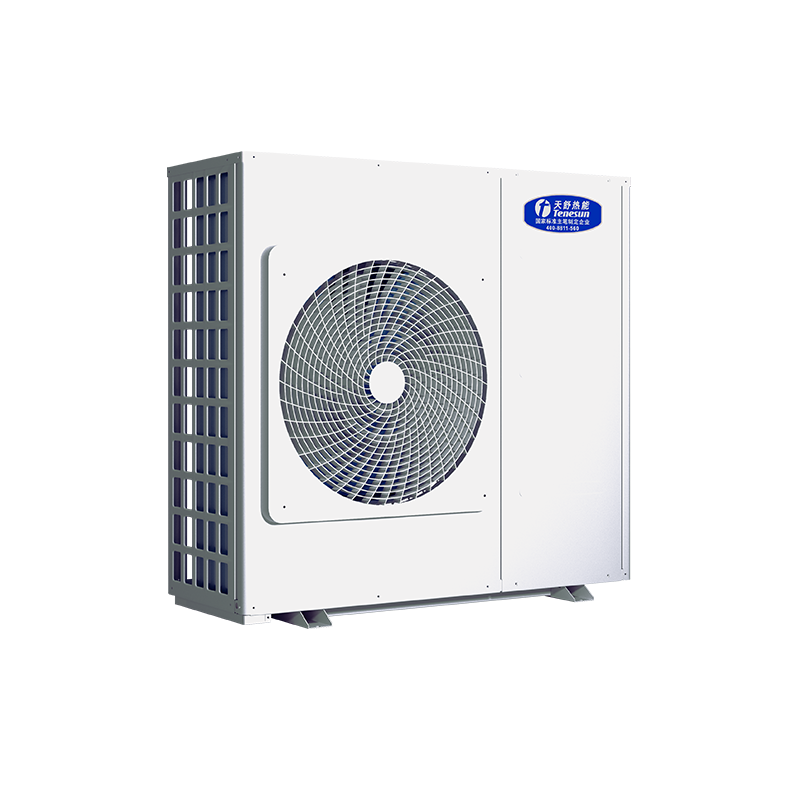
A superior product means nothing if the supplier cannot deliver it on time. Evaluating the operational maturity of your chosen swimming pool heat pump manufacturer mitigates severe project delays.
Evaluate the actual facility size and the number of active production lines. A reliable supplier should provide evidence of automated testing labs. Request videos or virtual tours of their end-of-line quality control processes. Every single unit should undergo helium leak testing and electrical safety checks before crating. Factory maturity directly correlates with defect rates. Facilities utilizing advanced robotics and strict ISO protocols consistently output higher-quality equipment.
Define acceptable delivery windows during initial talks. Ask for historical data on their ability to fulfill high-volume orders. You must know how they handle peak manufacturing seasons. Supply chain bottlenecks often occur during spring. A robust manufacturer maintains sufficient raw material inventory to prevent production stalls. Clearly outline penalty clauses for delayed shipping in your procurement contracts to protect your project timelines.
Many commercial projects require specific adaptations. If your project requires white-labeling, vet their in-house R&D capabilities. You might need specific Building Management System (BMS) integrations. Modbus or RS485 communication protocols allow the heat pump to speak with central facility computers. Sometimes, coastal installations require custom anti-corrosion casing. Engineering agility separates top-tier manufacturers from basic assemblers. Ask them to showcase past custom solutions they designed for similar clients.
Commercial equipment installations face strict municipal and national regulatory scrutiny. Failing to secure certified equipment leads to failed inspections and costly replacements.
Ensure the manufacturer holds valid, third-party verified certifications. These must align perfectly with your local jurisdiction. European projects require CE and RoHS compliance. North American installations demand UL or ETL listings. Australian facilities need WaterMark certification. Never accept self-certified documentation. Always ask for the official certification numbers and verify them independently through the issuing agency's online database.
Look for comprehensive ISO certifications to gauge operational maturity. ISO 9001 certification demonstrates a formalized Quality Management system. This ensures component traceability and consistent manufacturing standards. ISO 14001 indicates strict Environmental Management practices. Partnering with environmentally conscious suppliers often aligns with modern corporate sustainability goals. These certifications prove the factory operates under globally recognized management frameworks.
Request documented case studies of similar commercial installations. A brochure is a promise, but a case study is proof. Ask for examples matching your facility size and climate. For instance, request data on a 500,000-liter hotel pool operating in a temperate zone. Verify these references independently whenever possible. Call the facility managers listed in the case studies. Ask them directly about unit reliability, noise levels, and the supplier's responsiveness during unexpected breakdowns.
Best Practice: Always ask references about the commissioning phase. Did the supplier provide adequate remote or on-site support during the initial startup?
Common Mistake: Relying solely on references provided by the sales team without doing independent online research into the manufacturer's global reputation.
After-sales infrastructure separates transactional vendors from true long-term strategic partners. You must analyze the fine print to protect your investment.
Read the warranty documents meticulously. Many warranties become entirely voided if you install residential units in commercial settings. Ensure the warranty explicitly covers commercial usage parameters. Continuous operation places immense strain on components. A true commercial warranty acknowledges this heavy duty cycle. Look for clauses regarding bather loads or chemical imbalances. You need a warranty that survives the realities of a busy public aquatic facility.
Differentiate between various component coverages. A generalized "five-year warranty" rarely covers the whole machine equally. The titanium heat exchanger often carries a 5 to 10-year warranty because it rarely fails. However, the compressor and delicate electronic components typically carry only 1 to 3 years of coverage. Understand exactly who pays for labor if a part fails. Many international warranties cover replacement parts but leave you paying steep local labor rates for installation.
Ask detailed questions about spare parts inventory distribution. A low upfront unit cost is quickly negated if your hotel pool remains closed for three weeks. Waiting for a proprietary control board to ship overseas damages your reputation. Ensure they have localized distributors holding essential spares. Test their technical support response times before buying. Send a technical question to their support email and measure how many days they take to provide a functional answer.
Structured procurement eliminates emotional bias and aggressive sales tactics. Follow a phased approach to finalize your equipment partner.
Send your comprehensive specification sheet to five or seven carefully selected manufacturers. This document should include your climate data, pool volume, target temperatures, and infrastructure limits. Filter their responses ruthlessly. Eliminate any supplier who responds with a generic product catalog. You only want partners who return tailored sizing calculations and specific unit recommendations. Their initial RFI response indicates how they will treat you after they secure your money.
For multi-site rollouts or massive resort networks, never buy in bulk immediately. Procure a single unit first. Test its build quality physically. Measure the noise levels (decibel rating) at various distances to ensure it complies with local noise ordinances. Hook it up and measure the actual power draw against their claimed specifications. This pilot phase highlights hidden flaws in the swimming pool heat pump before you commit heavy capital.
Map out a 10-year operational expenditure projection for your top three shortlisted manufacturers. Compare the initial unit cost against shipping fees. Project the annual energy consumption using the realistic COP data you gathered earlier. Factor in estimated preventative maintenance routines. A cheaper unit usually consumes more electricity daily, erasing its initial savings within the first three years. Choose the system offering the best long-term efficiency balance.
Selecting a commercial equipment manufacturer represents a critical strategic partnership, not a simple transactional purchase. The right partner aligns robust, energy-efficient technology with absolute supply chain transparency. They back their hardware with commercial-grade warranties and localized support networks. Do not rush this evaluation process. Your immediate next action is to compile your facility’s environmental data and pool dimensions. Build a precise, uncompromising specification sheet before initiating conversations with potential suppliers. This preparation guarantees you procure a system built for operational longevity.
A: Commercial units feature industrial-grade compressors designed for continuous, heavy-load operation. They utilize reinforced casing and incorporate advanced Building Management System (BMS) integration capabilities like Modbus. Furthermore, their warranties explicitly permit continuous usage, whereas residential warranties often void under commercial stress.
A: Standard industry lead times generally range from 30 to 60 days for manufacturing. You must also add international shipping times, which can take an additional 20 to 40 days depending on your location. Advance procurement planning is essential to avoid missing facility opening dates.
A: Yes. Most modern commercial-grade units include built-in RS485 or Modbus communication ports. This allows seamless integration with central smart facility dashboards, enabling facility managers to monitor water temperatures, adjust setpoints, and receive error codes remotely.


