English


Views: 0 Author: Site Editor Publish Time: 2026-10-01 Origin: Site


Rising energy costs and strict environmental regulations are squeezing facility budgets across the board. For hotels, hospitals, and large-scale fitness centers, reliable hot water is not an optional luxury. It is the core lifeblood of daily operations. Yet, keeping legacy combustion systems running is rapidly turning into a costly and unsustainable liability.
We need to move past the standard marketing jargon and look at the engineering reality. By directly comparing modern electrification technologies against traditional gas and electric resistance systems, the facts become clear. You will see the actual thermal efficiency, real upfront costs, and pure long-term Return on Investment. My goal as an engineer is to help facility managers and building owners make the smartest, data-backed operational decisions for their infrastructure.
Unmatched Efficiency: Advanced heat pumps achieve 300 to 400 percent efficiency. This completely shatters the 80 to 95 percent maximum physical limit of traditional gas or electric boilers.
Reduced Operating Costs: Adopting new technology requires a higher initial capital expenditure. However, it drastically reduces monthly utility bills and offers a highly predictable long-term return on investment.
Environmental Compliance: Upgrading eliminates on-site fossil fuel combustion entirely. This transition helps commercial facilities seamlessly meet strict local decarbonization laws and corporate sustainability goals.
Strategic Upgrades: Retrofitting an older mechanical room is highly feasible. It simply requires careful engineering regarding physical footprint, electrical capacity, and local climate conditions.
Flexible Hybrid Options: Facilities operating in extreme sub-zero climates do not have to choose just one system. Hybrid configurations balance high-efficiency base loads with fail-safe combustion backups.
The commercial HVAC sector is experiencing a massive, irreversible shift. Recent market analyses and search trends show a rapid transition toward total building electrification. This movement is heavily driven by volatile fossil fuel prices and aggressive government decarbonization targets. Property owners are actively moving away from natural gas to avoid future regulatory penalties and stranded assets. Electrification is no longer just a niche green building initiative. It is the new baseline standard for commercial real estate valuation and long-term risk mitigation.
To make an informed financial decision, procurement teams must first understand the fundamental engineering differences between these two systems. This debate is not merely about brand preference. It centers on entirely different methods of thermodynamics.
Traditional systems consume fuel to create heat from scratch. In contrast, a heat pump utilizes a sophisticated refrigeration cycle to move existing thermal energy from one place to another. By extracting ambient heat from the surrounding air, ground, or water sources, the system operates with remarkable mechanical efficiency.
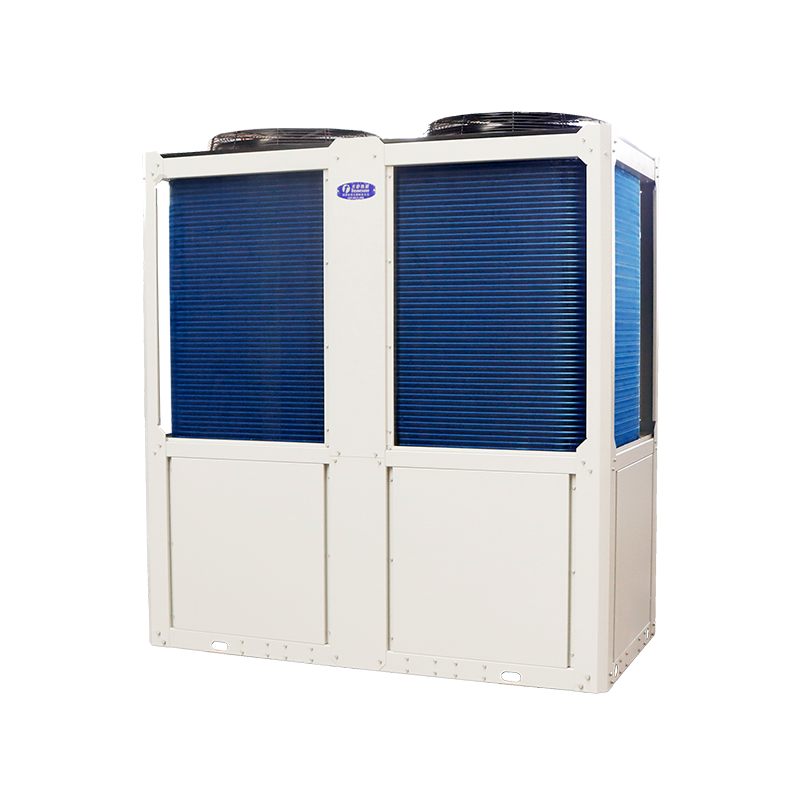
Currently, the most accessible option for facility upgrades is the commercial hot water heat pump, which pulls thermal energy directly from ambient air. Industry-leading models like the Tenesun KFXRS-76II-A utilize advanced scroll compressors and eco-friendly refrigerants. The system multiplies this captured heat and transfers it to the storage tanks. Because it functions by moving energy rather than generating it, the electrical input required to run the compressors is incredibly small compared to the massive thermal output achieved.
Traditional commercial boilers rely on a much simpler, albeit inherently wasteful, process of direct generation. Whether burning natural gas, propane, or relying on electrical resistance elements, boilers must constantly consume raw energy to create heat.
During a typical combustion cycle, a burner ignites the fuel. The resulting hot gases pass through a metallic heat exchanger to transfer thermal energy to the water. The fundamental flaw in this legacy process is unavoidable energy loss. A significant portion of the heat inevitably escapes through the exhaust flue. Because a boiler generates heat, its maximum theoretical efficiency can never exceed 100 percent. Even the most meticulously maintained condensing boilers peak at around 95 percent efficiency.
Empirical data is the ultimate deciding factor when evaluating infrastructure upgrades. The performance metrics of these two technologies are measured using entirely different scales. This often causes confusion during the initial energy auditing process.
To accurately compare these systems, we must look at their respective regulatory efficiency ratings. We use Annual Fuel Utilization Efficiency for combustion equipment and Coefficient of Performance for refrigeration-based systems.
The Annual Fuel Utilization Efficiency metric applies strictly to gas and oil boilers. A rating of 85 percent dictates that 85 percent of the fuel consumed is converted into usable heat. The remaining 15 percent is lost to the atmosphere as exhaust. They are bound by the laws of physics and will never achieve full conversion.
Conversely, the Coefficient of Performance metric applies to heat pumps. A rating of 3.0 indicates that for every single unit of electrical energy consumed by the compressor, it outputs three units of thermal energy. This translates to an equivalent efficiency of 300 percent. Depending on ambient temperatures, modern units routinely achieve ratings fluctuating between 3.0 and 4.0.
Building owners often worry whether new technology can handle aggressive peak demand hours. Imagine a large hotel during the morning shower rush or a food processing plant executing simultaneous equipment washdowns. The demand for scalding water is immense.
Combustion systems feature exceptionally high recovery rates. By burning fossil fuels at extreme temperatures, they heat incoming cold water almost instantaneously. Heat pumps operate on a different paradigm. Because they prioritize efficiency, they heat water more gradually. To ensure flawless consistency under heavy commercial demand, we pair these systems with adequately sized thermal storage tanks. When properly engineered with precise temperature stratification techniques, a modern electrified system delivers uninterrupted hot water during the most brutal usage spikes.
Commercial buyers care deeply about the bottom line. The choice between these two distinct technologies represents a classic financial debate of Capital Expenditure versus Operating Expenditure.
Installing advanced electrification technology requires a higher initial capital investment than executing a standard boiler replacement. Several logistical factors drive this upfront cost difference.
The units themselves contain complex refrigeration components, including variable-speed compressors, evaporators, and advanced digital controls. In addition, facilities must often purchase larger supplementary hot water tanks to meet peak volume demands. Retrofitting an older building may also necessitate structural modifications to ensure proper airflow and main electrical panel upgrades to safely handle the new compressor load.
While the initial invoice is higher, the long-term financial lifecycle heavily favors the heat pump. Because these systems operate at ultra-high efficiencies, they immediately slash monthly utility bills.
Facilities routinely observe a 50 to 70 percent reduction in their dedicated water heating energy expenses. This massive reduction typically results in a break-even point of roughly three to seven years. Beyond that threshold, the system generates pure operational savings. Utilizing electrified heating thoroughly protects the facility from the notorious volatility of global fossil fuel markets. This offers property managers highly predictable and stable long-term budgets.
Theoretical efficiency looks great on a spreadsheet. However, it means very little if the equipment cannot physically fit or operate within your specific building. Facility managers must carefully audit their physical infrastructure before committing to a purchase order.
Traditional gas boilers are celebrated for being highly compact. They are designed to deliver massive thermal output from a minimal physical footprint. This makes them perfectly suited for cramped, poorly ventilated mechanical rooms hidden in the basements of older urban buildings.
In stark contrast, heat pumps demand significantly more spatial planning. Beyond the necessity for larger storage tanks, the operational units require specific cubic clearances for airflow. Because they actively extract heat from the surrounding air, placing a unit in a sealed closet will cause the ambient room temperature to plummet rapidly. This will eventually freeze the system coils. Mechanical rooms must be equipped with adequate square footage, louvered access doors, or dedicated ducting to guarantee a continuous supply of fresh air.
A persistent myth within the HVAC industry is that refrigeration cycles become completely useless during the dead of winter. Modern engineering has completely eradicated this limitation.
Today's cold-climate air source heat pump water heater technology utilizes advanced refrigerants paired with vapor-injection compressors. Robust models like the KFXRS-76II-A can successfully extract latent thermal energy from the outdoor air even when temperatures plunge down to minus 15 degrees Celsius.
These systems also offer a highly lucrative operational bonus known as free cooling. As the equipment extracts heat to warm the water, it expels crisp, dehumidified air as a natural byproduct. Savvy facility managers frequently duct this cool exhaust air directly into sweltering commercial kitchens, humid laundry rooms, or overheated server closets. This ingenious routing effectively reduces the primary air conditioning load of the building.
The decision to upgrade is rarely driven by a mere desire for shiny new technology. It is driven by the undeniable math of aging infrastructure. Knowing exactly when to initiate an upgrade is critical to avoiding catastrophic mid-winter failures.
Proactive planning is essential for commercial properties. You should seriously consider a comprehensive mechanical upgrade if your current system has surpassed the 15-year mark. Age inevitably brings degradation. A system rated for 85 percent efficiency a decade ago may now be operating closer to 70 percent.
If your maintenance team is continuously replacing valves, patching corroded heat exchangers, or battling scale buildup, the cumulative cost of these emergency repairs will soon eclipse the cost of a new system. Unexplained spikes in your monthly natural gas consumption strongly indicate that the legacy equipment is failing to transfer heat effectively.
Integrating modern electrification into an existing structure presents unique engineering hurdles. In new commercial construction, mechanical engineers are almost exclusively specifying heat pumps from day one. They effortlessly design the electrical grids and spatial footprints around the equipment.
Retrofitting requires a much more calculated approach. Transitioning away from gas combustion necessitates a thorough audit of the electrical capacity of the building. If the existing main panel cannot support the increased amperage, upgrade costs will factor into the return on investment. Physically navigating massive new storage tanks through narrow basement corridors also requires meticulous logistical planning by experienced contractors.
Facility owners facing severe spatial constraints or brutal geographical climates do not have to make an all-or-nothing choice. The hybrid approach offers an elegant engineering compromise.
In this configuration, a business installs an electrified system to handle 80 to 90 percent of the base hot water load during normal weather conditions. A smaller condensing gas boiler is retained purely as a fail-safe backup. When ambient temperatures drop below a specific economic threshold, an automated control system seamlessly activates the gas boiler to supplement the heating demand. This prevents the need to drastically oversize the electrical equipment just to accommodate a few weeks of extreme winter weather.
Environmental compliance is no longer just a corporate social responsibility talking point. It is rapidly becoming a strict legal mandate that directly impacts the financial viability of a building.
Property portfolios are aggressively targeting direct greenhouse gases produced from on-site combustion. By transitioning to electrified commercial water heating, facilities can effectively eliminate their on-site carbon footprint.
Market data indicates that this technology has rapidly evolved into the baseline standard for major retrofits. This pivot is heavily accelerated by new legislation. Numerous municipalities globally have already enacted strict bans on new natural gas hookups while imposing heavy annual financial penalties on existing buildings that fail to meet aggressive emission reduction targets.
To ease the financial burden of this green transition, governments and local utility companies are deploying unprecedented financial incentives. The initially daunting capital expenditure of advanced HVAC equipment is frequently offset by a complex web of commercial rebates and performance-based utility grants.
When these aggressive financial incentives are accurately factored into a lifecycle cost analysis, the return on investment timeline shrinks dramatically. Leveraging these programs allows facility managers to procure premium electrified systems for a net out-of-pocket cost comparable to a standard boiler replacement.
Making the final procurement decision requires aligning your specific daily operational demands, geographical location, and long-term financial goals with the physical realities of your property.
Electrified systems are the undisputed optimal choice for facilities that experience high, consistent daily domestic water demand. Hotels, large multifamily housing complexes, university dormitories, and commercial gyms are prime candidates.
Specifically, facilities that can strategically harness the free cooling byproduct will see an amplified return on investment. Routing the cold exhaust air to offset primary air conditioning loads creates a dual-purpose mechanical asset that traditional boilers simply cannot replicate.
Despite the overwhelming efficiency advantages of new technologies, there remain specific scenarios where retaining a combustion boiler is the most logical short-term choice. If your facility is located in an extreme sub-zero climate and absolutely lacks the capital budget to engineer a hybrid system, a high-efficiency condensing boiler may still be necessary.
Historical buildings with severe spatial constraints that physically cannot accommodate larger thermal storage tanks may also face challenges. If upgrading the main electrical service panel would be prohibitively expensive, a standard gas replacement might be the only financially viable stopgap.
Performance Metric | Traditional Commercial Boiler | Commercial Heat Pump System |
|---|---|---|
Energy Efficiency | 80 to 95 percent maximum physical limit due to combustion physics | 300 to 400 percent transfers ambient heat rather than generating it |
Upfront Capital Cost | Lower standardized equipment and familiar installation | Higher requires larger tanks and potential electrical upgrades |
Operating Costs | High highly vulnerable to volatile fossil fuel market prices | Low maximizes electrical efficiency for predictable stable billing |
Space Requirements | Compact fits easily into existing cramped mechanical rooms | Moderate to Large requires adequate airflow and larger storage capacity |
Environmental Impact | High generates constant on-site carbon emissions | Zero On-Site Emissions fully supports local decarbonization goals |
Cold Weather Operation | Unaffected by ambient outdoor temperatures | Requires specific cold-climate engineering or a hybrid backup system |
Traditional gas boilers certainly offer the comfort of familiarity and lower initial installation costs. However, heat pumps undeniably deliver superior long-term financial returns. Their ultra-high efficiency not only slashes monthly overhead but also ensures strict compliance with incoming environmental regulations. This effectively insulates your property from unpredictable spikes in fossil fuel markets.
Stop relying on guesswork to manage your most critical building infrastructure. Every property has a unique thermal footprint and specific logistical constraints. To make the smartest, most lucrative financial choice for your facility, explore the robust lineup at Tenesun Heat Pump. Contact an experienced commercial HVAC contractor today to request a comprehensive site audit and custom lifecycle analysis based on proven, high-performance equipment.
Yes. Under the right architectural and climatic conditions, this technology can serve as a total replacement. With precise mechanical engineering, accurate load sizing, and the installation of appropriately scaled thermal storage tanks, a modern electrified system can comfortably handle all daily domestic hot water needs. For facilities located in regions where winter temperatures consistently remain well below freezing, engineers frequently recommend a hybrid approach to handle extreme peak demands without oversizing the electrical infrastructure.
When subjected to a rigorous professional maintenance schedule, a premium commercial unit has an expected operational lifespan of 15 to 20 years. This longevity is directly comparable to that of a traditional heavy-duty boiler. To maximize this lifespan, facility managers must ensure regular servicing of the variable-speed compressors, routine inspection of refrigerant levels, and periodic flushing of the storage tanks to prevent mineral scale buildup.
Yes, they absolutely do. It is a widespread misconception that thermal extraction is impossible in the dead of winter. Modern cold-climate systems are engineered with advanced refrigerants and vapor-injection technology. These advancements allow the equipment to successfully extract latent heat energy from the outside air even when ambient temperatures drop to minus 15 degrees Celsius. While the efficiency rating does naturally decrease in extreme cold, it still consistently outperforms standard electrical resistance heating.
Exact financial savings are heavily dependent on your specific local utility rates and daily water usage patterns. However, the general consensus among commercial energy auditors is highly favorable. Because these systems produce three to four units of heat for every single unit of electricity consumed, commercial businesses typically observe a 50 to 70 percent reduction in their dedicated water heating energy costs compared to operating standard legacy boilers.
Generally speaking, the physical footprint of the entire mechanical system is larger. Refrigeration cycles are designed to heat water more gradually over time to maintain their ultra-high efficiency ratings. They cannot provide instantaneous rapid-fire heating. To compensate for this slower recovery rate and ensure facilities never run out of hot water, the system requires significantly larger hot water storage tanks alongside adequate cubic airflow for the operational units themselves.
Sizing a heat pump requires a completely different engineering approach. Instead of matching the instantaneous peak kilowatt output of a gas burner, engineers calculate the total daily hot water volume required by the facility. We then size the heat pump to recover this volume steadily over several hours, storing the thermal energy in large insulated tanks. This method keeps the peak electrical load low while ensuring plenty of hot water is available during maximum usage times.
Yes. Modern commercial units come equipped with advanced digital controllers. They support standard communication protocols such as Modbus or BACnet. This allows facility managers and engineering teams to monitor real-time performance, adjust temperature setpoints, and track energy consumption directly from a centralized building dashboard.


