English


Views: 0 Author: Site Editor Publish Time: 2026-10-11 Origin: Site


Many pool owners dream of swimming comfortably long after the summer season ends. They want to extend their swimming season or maintain year-round pool usage despite changing weather. However, conflicting information about heating equipment viability often creates confusion for those living in colder climates. The fundamental thermodynamic reality is simple. Because heat pumps extract ambient heat from the outside air rather than generating it from scratch, their efficiency ties directly to dropping outdoor temperatures. When winter approaches, extracting airborne heat becomes significantly harder.
This article provides a transparent, evidence-based look at the operational limits of a swimming pool heat pump in freezing conditions. We will explore the exact hardware requirements necessary for low-temperature operation. You will learn how to accurately evaluate if this technology aligns with your heating goals and budget without overspending on wasted energy.
Standard heat pumps lose significant efficiency (COP) when air temperatures drop below 50°F (10°C).
Specialized low-ambient models with hot-gas defrost capabilities can operate in temperatures as low as 20°F (-6°C), but at increased energy costs.
Heating a pool in cold weather requires mandatory pairing with a high-quality thermal pool cover to prevent rapid heat loss.
For deep-winter swimming in freezing climates, a hybrid system (heat pump + gas heater backup) is often the most reliable and cost-effective architecture.
To understand why winter pool heating is challenging, you must understand how these units breathe. They do not create heat using fire or electrical resistance. Instead, a fan pulls outside air over a cold evaporator coil. The liquid refrigerant inside the coil absorbs thermal energy from the air. The compressor then pressurizes this warmed gas, creating intense heat. Finally, a titanium heat exchanger transfers this heat into your circulating pool water.
The 50°F (10°C) threshold is a critical benchmark in this industry. Standard models struggle when ambient air falls below this point. There simply is not enough ambient heat available to harvest efficiently. The machine runs longer, the compressor strains, and the system eventually shuts down to protect its internal components.
This drop in efficiency is measured by the Coefficient of Performance (COP). You must read COP ratings realistically. Manufacturers often advertise a COP of 6.0 based on ideal laboratory conditions (like 80°F air). This means the unit produces six units of heat for every one unit of electricity consumed. However, at 40°F, that COP might plunge to 2.0 or lower. Lower COP brings a direct financial implication. It means much longer run times and higher electricity consumption to achieve the exact same water temperature.
Estimated COP Drop-Off by Ambient Temperature
Ambient Air Temperature | Average COP | Energy Consumption Impact |
|---|---|---|
80°F (27°C) | 5.5 - 6.0 | Highly efficient; lowest operating cost |
60°F (15°C) | 4.0 - 4.5 | Moderate efficiency; standard operation |
50°F (10°C) | 3.0 - 3.5 | Noticeable drop; longer run times required |
40°F (4°C) | 1.5 - 2.0 | Low efficiency; high electricity usage |
You also face the evaporator coil freezing problem. When outside air is 40°F, the refrigerant inside the coil runs much colder. Airborne moisture condenses on the metal fins and immediately freezes. Solid ice blocks the airflow entirely. Without airflow, the system cannot absorb heat, triggering automatic safety shut-offs.
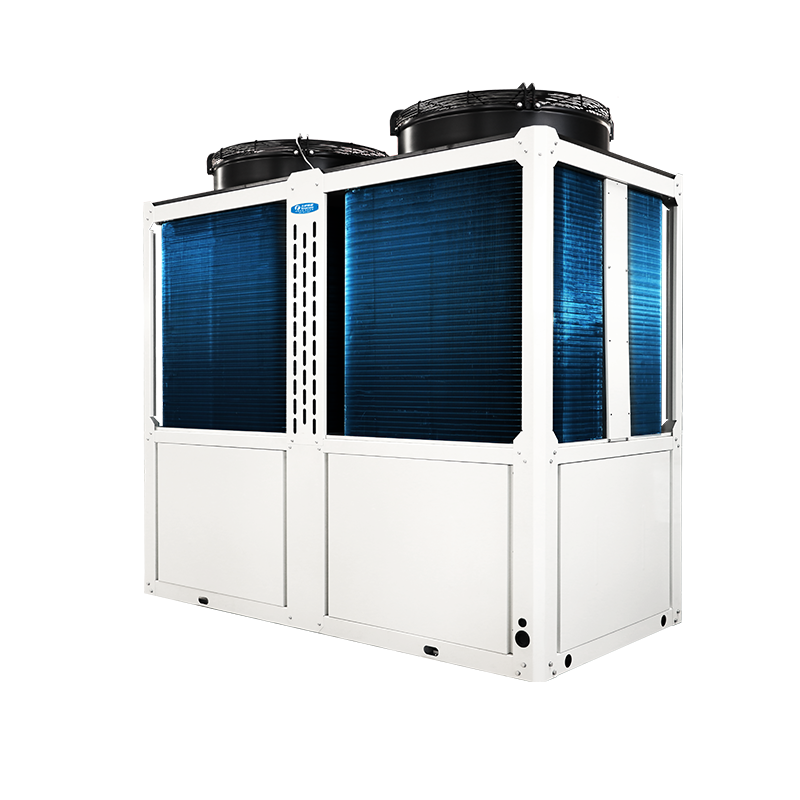
Using basic equipment in freezing temperatures leads to frustration and damaged parts. Traditional single-speed compressors fail in cold climates. They turn on at full power and turn off completely when they hit a target. They lack flexibility. This rigid cycle wastes energy and strains the compressor when fighting freezing temperatures.
Variable-speed inverter technology solves this. Inverter compressors ramp up softly. They continuously adjust their operational speed to match the exact heating demand. By running at lower, sustained speeds, they squeeze maximum thermal energy out of cold air. Upgrading to an inverter model is standard practice if you expect winter performance.
Passive defrost systems simply turn off the compressor while leaving the fan running. They rely on ambient air to melt the ice off the coils. This works fine if the air is 55°F. It fails completely if the air is 35°F. You cannot melt ice with freezing air.
A true swimming pool heat pump cold weather unit uses an active hot-gas defrost system. It utilizes a reversing valve to temporarily switch the flow of refrigerant. It pulls heat from the pool water and sends it directly into the frozen evaporator coil as hot gas. This melts thick ice in minutes. Once clear, the unit resumes normal heating. This reverse-cycle technology is the only reason specialized models can operate in temperatures as low as 20°F.
Sizing considerations are equally critical for cold weather. Standard sizing formulas assume you swim in the summer. If you plan to rely on the unit during shoulder seasons or mild winters, you must oversize the equipment.
Calculate your baseline BTU requirement based on your pool volume.
Add a 20% to 30% sizing buffer to account for cold weather COP drop-off.
Select a unit with a larger heat exchanger surface area to maximize thermal transfer.
You must evaluate your primary goal before choosing a winter heating strategy. Gas heaters and electric heat pumps behave entirely differently under thermal stress. Gas heaters provide rapid, on-demand heating. They literally burn natural gas or propane, so they do not care about the ambient air temperature. They blast heat into the water quickly. Conversely, heat pumps require slow, continuous operation. Their recovery rate (time-to-temperature) is sluggish during winter.
Understanding the cost of operation matrix will prevent billing surprises. Electric heating is almost always cheaper than gas during the summer and early fall. However, the cost gap narrows dangerously during extreme cold. As the COP drops, electricity usage spikes. You must calculate the breakeven point based on your local utility rates. If natural gas is exceptionally cheap in your area, relying solely on electricity during a freezing January might not make financial sense.
Smart pool owners in demanding climates combine the strengths of both systems. The hybrid heating approach uses both electric and gas technologies in tandem.
You use the heat pump for base-load heating. It runs continuously at a low cost to maintain a baseline water temperature of roughly 70°F. Then, you use the gas heater for peak-load heating. When you decide to swim on a chilly Friday evening, the gas heater rapidly boosts the water to 85°F. This method gives you the best of both worlds. Experienced swimming pool heat pump technicians highly recommend this setup for frost-prone regions.
To execute this properly, you need modern automation. Smart controllers toggle between heat sources based on real-time ambient temperature sensors. If the air drops below 40°F, the system locks out the electric unit and fires up the gas heater automatically.
Throwing money at high-end equipment will fail if you ignore pool physics. Thermodynamics dictate that 70% of a pool's heat loss occurs directly at the water's surface through evaporation. As warm water turns into vapor, it steals massive amounts of thermal energy from the pool.
The absolute necessity of pool covers cannot be overstated. Running heating equipment in cold weather without a heavy-duty solar blanket or automatic cover is a guaranteed way to waste electricity. You will run the compressor 24/7, spike your utility bill, and still fail to achieve your desired water temperature. The cover acts as insulation, trapping the heat you just paid for.
Winterization versus continuous circulation is another critical reality. Moving water rarely freezes. If you rely on your equipment during hard freezes, the water pump must run continuously to prevent pipe freezing. However, you must identify your personal "abandon ship" threshold.
You cannot fight a severe winter storm. If a multi-day blizzard approaches with sub-zero temperatures, you must know when to quit. Officially shut down the system, drain the heater unit, and winterize the equipment pad. Trapped water expands when frozen, causing catastrophic damage to the titanium heat exchanger and PVC pipes. Manufacturers will void your warranty if they detect ice expansion damage.
Before purchasing new equipment, evaluate your geographic location and swimming habits against these three common scenarios.
Scenario A: The Shoulder-Season Extender (Ideal Fit)
You live in a moderate climate. You want to swim in early spring and late fall. Your nighttime temperatures drop to 45°F, but daytime highs warm up to 65°F. An oversized inverter model with basic defrost will thrive here. It will keep your pool perfectly comfortable at a low operational cost.
Scenario B: The Sunbelt Winter Swimmer (Viable Fit)
You live in a mild winter climate like Florida, Southern Texas, or Arizona. You want year-round swimming. You rarely see hard freezes, but winter days hover in the 50s. A specialized low-ambient model is the most cost-effective choice. It will outperform gas heating over a five-year timeline.
Scenario C: The Northern Frostbelt (Poor Fit as Standalone)
You live in New York, Michigan, or Canada. You experience consecutive weeks of sub-freezing temperatures and heavy snow. A standalone electric model will not suffice here. It will freeze over and fail to keep the water swimmable. You strictly require a heavy-duty gas heater or a sophisticated hybrid setup.
Yes, a swimming pool heat pump can absolutely work in cold weather, provided you respect the laws of thermodynamics. Success requires matching the right hardware to your specific climate. You must purchase a unit equipped with an active hot-gas defrost system to survive freezing coils. You must oversize the BTU capacity to compensate for efficiency drops. Most importantly, you must strictly use a high-quality pool cover to trap the thermal energy.
Take actionable next steps before winter arrives. Consult an online sizing calculator based on your specific geographic zone, desired temperature, and water volume. Review your local utility rates to compare electricity against natural gas. Finally, contact a certified pool technician to audit your current equipment pad. They can verify if your plumbing and electrical panels support a hybrid heating architecture.
A: Yes, it can work at 40 degrees if it is specifically equipped with a hot-gas defrost system. However, its efficiency drops significantly. It will heat the water very slowly and consume more electricity compared to summer operation. A standard unit without active defrost will likely freeze and shut down.
A: You should only leave it on all the time if you are actively trying to maintain swimming temperatures and prevent pipe freezing in a mild climate. If you live in a region with hard, sustained freezes, it should be properly winterized, drained, and shut down to prevent ice damage.
A: This is normal behavior during the active defrost cycle. The unit temporarily reverses its operation to send hot gas to the frozen internal coils. It stops heating the pool water briefly to melt the ice. The loud noise is the reversing valve shifting pressure, followed by the compressor working hard.
A: Yes, it can prevent a pool from freezing through continuous water circulation and active heating. Moving, warm water resists freezing. However, this strategy carries severe risks. A sudden winter power outage stops the circulation immediately, posing a massive freeze risk to your plumbing and equipment pad.


