English


Views: 0 Author: Site Editor Publish Time: 2026-10-05 Origin: Site


Are industrial sludge disposal costs quietly draining your facility's operational budget? Today, strict environmental regulations and skyrocketing landfill tipping fees exacerbate this financial burden. Traditional moisture extraction methods waste massive amounts of energy. Furthermore, they frequently produce harmful secondary emissions. Modern plant operators need a sustainable, high-efficiency solution to mitigate these challenges immediately. In this comprehensive guide, we explore how advanced thermodynamics are revolutionizing waste management. We will look at transforming heavy, wet byproducts into manageable, dry materials.
Recent market analyses reveal a decisive, industry-wide pivot toward electrification. Driven by aggressive global decarbonization targets and escalating carbon taxes, facility operators can no longer rely on legacy gas-fired systems. We are seeing a regulatory landscape that heavily penalizes high-emission disposal methods. Consequently, integrating a closed-loop heat pump drying system has evolved from a mere environmental initiative into a critical financial survival strategy. Facilities that fail to adapt face compounding disposal penalties, whereas early adopters are leveraging thermal reduction to achieve zero-waste-to-landfill certifications.
Before diving into technical mechanics, let's establish the baseline benefits. Integrating advanced thermal reduction equipment offers verifiable operational improvements.
Massive Volume Reduction: Advanced configurations slash byproduct volume and weight by up to 80%. This directly cuts down transportation fleets and landfill invoices.
Superior Energy Efficiency: Utilizing latent heat recovery, these systems consume a fraction of the electrical energy compared to direct-fire heaters.
Eco-Friendly Operation: Closed-loop environments produce zero toxic exhaust. They completely eliminate the release of volatile organic compounds and foul neighborhood odors.
Versatile Applications: Highly adaptable across diverse sectors, handling municipal biological waste to hazardous electroplating byproducts.
High Return on Investment: The initial capital expenditure is rapidly offset by daily savings in energy and hauling fees.
For facility managers evaluating waste reduction, grasping the thermodynamic principles behind moisture removal is critical. Unlike conventional heaters that blast hot air into a wet mass and vent humid exhaust outside, a heat pump utilizes a sophisticated refrigeration cycle. This ensures valuable thermal energy is continuously recycled rather than wasted.
The core principle relies on adapting standard refrigeration mechanics for dehumidification. The process operates in a continuous, sealed environment.
First, dry, hot air is forcefully circulated over the wet material. Because the air is starved of moisture, it rapidly absorbs water from the sludge. This transforms it into a humid, cooler air stream. Next, this moisture-laden air is drawn across the system's evaporator coil. The cold refrigerant inside absorbs the heat, dropping the air temperature below its dew point. Consequently, water vapor condenses into liquid water, safely draining away into standard treatment channels.
Picture the compressor as the industrial workhorse. The refrigerant, carrying latent heat recovered from the condensing vapor, travels here. The compressor pressurizes the refrigerant, significantly spiking its temperature. Finally, the hot, highly pressurized refrigerant flows through the condenser coil. The cooled, now-dry air passes over this coil, absorbing the intense heat. The air is reheated and blown back into the drying chamber, seamlessly restarting the cycle.
Equipment reliability depends on the seamless integration of heavy-duty components. The compressor drives the refrigerant, while evaporator and condenser coils handle critical heat exchange. Furthermore, the expansion valve meticulously regulates refrigerant flow. In continuous setups, specialized mesh conveyor belts maximize the surface area of the wet mass exposed to dry air, ensuring uniform moisture extraction.
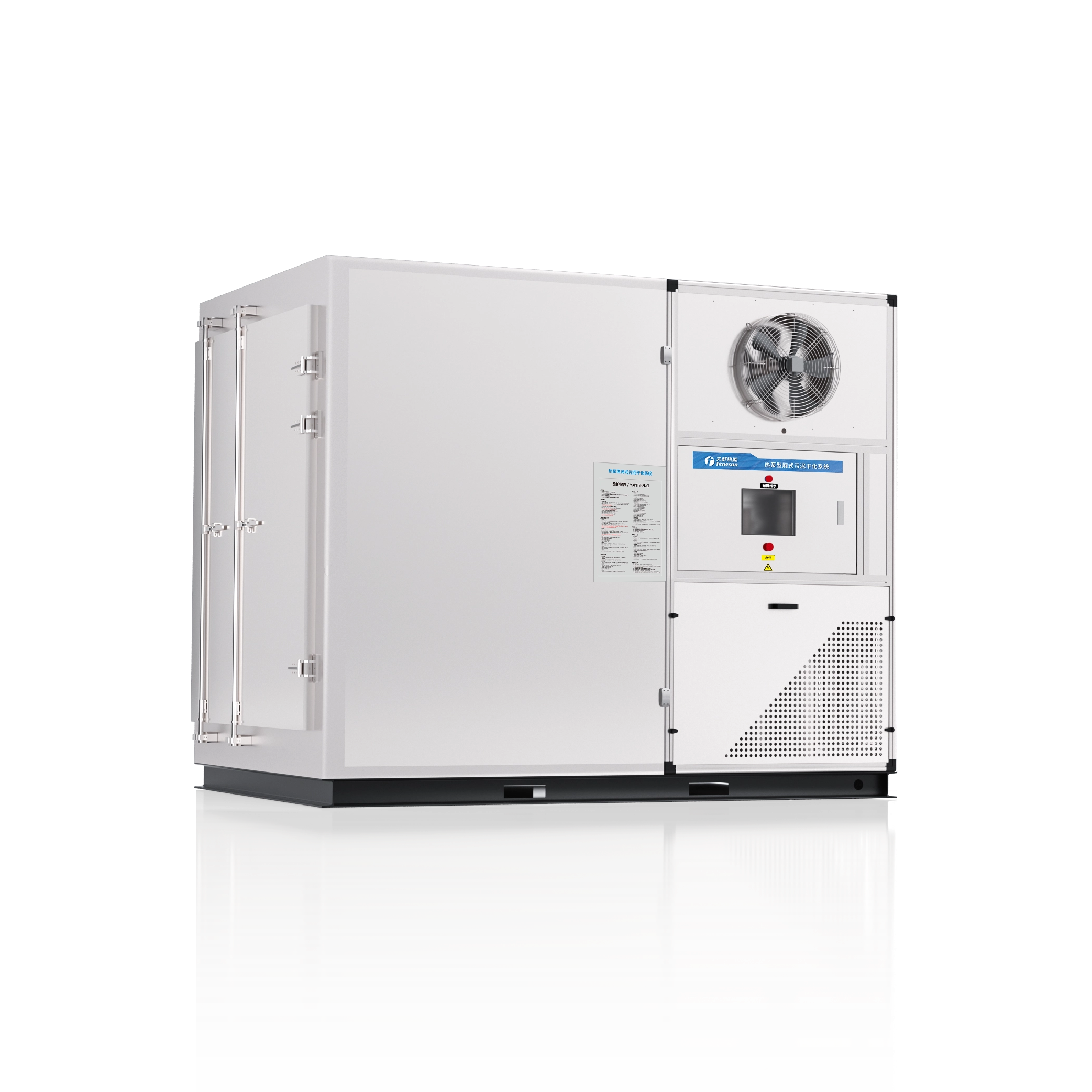
Having established the mechanical foundation, decision-makers must now analyze the total cost of ownership. The specific advantages of an industrial heat pump dryer directly impact operational expenditures and regulatory compliance.
The most compelling metric is the Coefficient of Performance. Traditional electric resistance heaters have a maximum theoretical Coefficient of Performance of 1.0. In stark contrast, modern heat pumps typically operate with a rating between 3.0 and 4.0. Specifically, for every kilowatt of electricity consumed by the compressor and fans, the system generates three to four kilowatts of effective drying heat. Compared to direct gas or coal-fired boilers, facilities routinely reduce energy consumption by 40% to 70%.
Industrial byproducts, immediately following mechanical dewatering, typically retain a moisture content of 75% to 85%. Consider a daily operation churning out 10,000 kg of wet byproduct at 80% moisture. At this stage, you are essentially paying exorbitant transport fees to haul water. Thermal drying effectively drives this moisture down to 10% to 30%. By dropping moisture to 20%, that original 10,000 kg mass reduces to just 2,500 kg. This 75% reduction in total weight constitutes the largest financial return.
Regulatory bodies globally are tightening restrictions on airborne emissions. Traditional dryers operate at extreme temperatures, causing the volatilization of heavy metals and organic compounds. This leads to toxic exhaust. Because heat pumps operate gently between 40°C and 75°C within a fully enclosed airflow loop, there is zero exhaust of contaminated air. Odorous compounds remain trapped, completely eliminating the risk of secondary atmospheric pollution.
The versatility of thermal reduction technology allows it to solve dewatering bottlenecks across multiple demanding sectors.
Municipal facilities process staggering volumes of biological waste daily. Historically, this material was land-applied wet or sent to landfills. With available landfill space shrinking, volume reduction is mandatory. Heat pumps provide municipalities with a scalable method to stabilize biological matter. They transform it into dry, pathogen-free granules that are easier to handle.
Waste generated by breweries, dairies, and food processing plants is highly organic and nutrient-dense. Aggressive high-temperature heating can destroy these nutrients and create fire hazards due to combustible dust. Low-temperature systems gently extract moisture while preserving organic integrity. Consequently, the dried material can often be repurposed and sold as high-quality agricultural fertilizer.
Byproducts from chemical manufacturing contain heavy metals, classifying them as hazardous waste. Disposal fees for these materials are priced at a massive premium per ton. The closed-loop design ensures no toxic chemical fumes escape into the factory atmosphere during processing. By stripping away the water weight, chemical plants drastically shrink their hazardous waste disposal invoices.
To build a solid business case for upgrading facility infrastructure, it is necessary to compare a low-temperature sludge dryer objectively against legacy methods. Capital expenditure must be weighed against long-term operational costs.
Direct thermal dryers rely on fossil fuel combustion, operating at temperatures exceeding 200°C. While they process material rapidly, they present severe safety hazards. The rapid vaporization of moisture creates high concentrations of dust, introducing significant explosion risks. Furthermore, scrubbing toxic volatile organic compounds from the exhaust requires expensive secondary treatment equipment. Heat pumps eliminate both the explosion risk and the need for exhaust scrubbers.
Solar greenhouses are often viewed as cost-effective since they rely on free energy from the sun. However, for industrial-scale operations, weather dependency is a critical flaw. During rainy seasons, the process halts, leading to massive backlogs on the factory floor. In addition, solar drying requires an enormous physical footprint. Heat pumps, conversely, offer guaranteed, precise performance 365 days a year within a highly compact footprint.
Many facilities still rely exclusively on mechanical dewatering. While centrifuges and filter presses are essential first steps, they face strict physical limitations. Mechanical pressure can only squeeze out free-flowing water; it cannot remove intracellular water trapped within biological cells. Thus, mechanical dewatering typically plateaus at 75% to 80% moisture. Thermal evaporation is required for the final reduction phase down to 20%.
Feature | Low-Temperature Heat Pump | Direct Thermal Gas or Coal | Solar Drying | Mechanical Press Only |
|---|---|---|---|---|
Operating Temperature | 40°C - 75°C | 200°C - 500°C | Ambient Variable | Not Applicable |
Energy Efficiency | Very High | Low | High | High |
Explosion Risk | Negligible | High | Negligible | None |
Weather Dependency | None | None | Highly Dependent | None |
Modern engineering has advanced far beyond basic refrigeration cycles. Manufacturers now incorporate sophisticated fluid dynamics to maximize the Specific Moisture Extraction Rate and ensure consistent facility throughput.
The efficiency of a dryer relies heavily on how effectively dry air interacts with the wet mass. Stagnant air pockets lead to uneven drying and force the compressor to overwork. Advanced setups utilize precision-engineered air deflectors and variable frequency drive fans to create turbulent, uniform airflow across the entire drying bed. By optimizing air velocity, the mass transfer of moisture is maximized, shortening the overall cycle time.
Selecting the correct mechanical configuration is vital. Imagine a specialized chemical plant generating highly variable, difficult-to-dry waste. Here, a batch cabinet dryer allows operators to wheel in carts of wet material and precisely control cycle times. Conversely, continuous belt dryers are engineered for large-scale municipal plants. Wet material is continuously extruded onto a slow-moving, multi-layered mesh belt, passing through distinct temperature zones without manual intervention.
Procuring industrial drying equipment is a major capital decision. Facility engineers must conduct a thorough site assessment based on empirical data rather than generic estimates to ensure the selected sludge drying heat pump meets operational demands.
Not all waste behaves the same way when heated. Engineers must account for the plastic phase, which is the sticky transition period occurring when moisture drops to between 40% and 60%. During this phase, material can clump and adhere to mechanical parts. If you are dealing with sticky or viscous byproducts, specialized non-stick belt coatings and specific extrusion dies are mandatory. For hazardous inorganic waste, internal components must be constructed from high-grade 316L stainless steel to prevent rapid acid corrosion.
Sizing the machine correctly prevents operational bottlenecks. Capacity is determined by calculating the daily water evaporation rate required. For example, modern containerized units can handle dehydration from 80% down to 10% moisture in a highly compact, modular footprint. Facility managers must calculate their daily wet output in tons, determine their target final moisture content, and match the resulting evaporation requirement with the manufacturer's specifications.
A professional procurement process looks beyond the initial invoice. Because the volume reduction is so severe, and the energy consumption remarkably low due to the high Coefficient of Performance, most industrial facilities achieve a full return on investment within 12 to 36 months. After crossing the break-even point, the system generates pure operational savings year over year.
The implementation of advanced thermal drying technology solves major logistical and financial hurdles for modern manufacturing and wastewater facilities. By transitioning away from outdated, fossil-fuel-reliant methods, operators can drastically reduce exorbitant disposal costs while simultaneously meeting the strictest environmental regulations. These closed-loop systems completely prevent harmful secondary pollution and offer unparalleled energy savings. Upgrading your facility's waste management infrastructure is a highly strategic financial decision. Stop wasting your operational budget on inefficient hauling and landfill fees. Explore the comprehensive range of industrial drying solutions at Tenesun Heat Pump to find the exact configuration that matches your operational needs and take the step toward sustainable byproduct management today.
Depending on the specific industrial application and the operator's requirements, these systems typically achieve a final moisture content between 10% and 30%. By driving the moisture levels down this low, facilities transition heavy, wet masses into dry, granular pellets. This extreme reduction maximizes volume and weight savings, directly translating to lower transportation and landfill disposal costs.
Yes, these systems are highly adaptable for hazardous environments. For industries like electroplating, chemical manufacturing, and metallurgy, the waste often contains corrosive acids or heavy metals. Manufacturers address this by constructing the internal drying chambers, heat exchangers, and conveyor belts from heavy-duty, anti-corrosive materials such as 316L stainless steel or titanium. This ensures equipment longevity and safe operation even under harsh chemical conditions.
The energy savings are substantial when compared to traditional thermal drying methods. Heat pumps utilize a closed-loop thermodynamic cycle that recovers the latent heat of vaporization. Instead of exhausting hot air into the atmosphere, the system recycles that energy back into the drying process. This yields a Coefficient of Performance of 3.0 to 4.0. In practical terms, facilities observe a 40% to 70% reduction in operating energy costs compared to direct electric heaters or fossil-fuel-based dryers.
Absolutely. The thermal drying process, even at lower temperatures between 60°C and 75°C, is sufficient to pasteurize organic waste. This destroys harmful pathogens and stabilizes the biological matter. For municipal and food processing plants, this dry, stabilized granular material can often be repurposed as nutrient-rich agricultural fertilizer or sold as high-calorific biomass fuel. For hazardous inorganic waste, the drying process stabilizes the material, preventing chemical leaching and allowing for safer, significantly cheaper disposal.
Routine maintenance primarily involves ensuring unobstructed airflow and optimal refrigerant pressures. Facility operators should regularly inspect and clean the air filters and condenser coils to prevent dust buildup, which can lower the system's overall efficiency. Additionally, for continuous belt systems, checking the tension and alignment of the mesh conveyor belt is crucial. Because these systems operate at low temperatures without combustion, wear and tear on internal components is significantly lower than in traditional gas-fired dryers, resulting in drastically reduced annual maintenance costs.
The drying cycle time varies based on the initial moisture content, the specific physical characteristics of the sludge, and the chosen equipment configuration. In a batch-type cabinet dryer, a complete cycle might take anywhere from 12 to 24 hours to reduce moisture from 80% down to 20%. Conversely, continuous belt dryers are engineered for relentless throughput. Once the wet mass is extruded onto the belt, it typically traverses the multi-zone drying chamber in 2 to 6 hours. Utilizing variable frequency drive fans and optimized extrusion dies can further accelerate this mass transfer of moisture.


